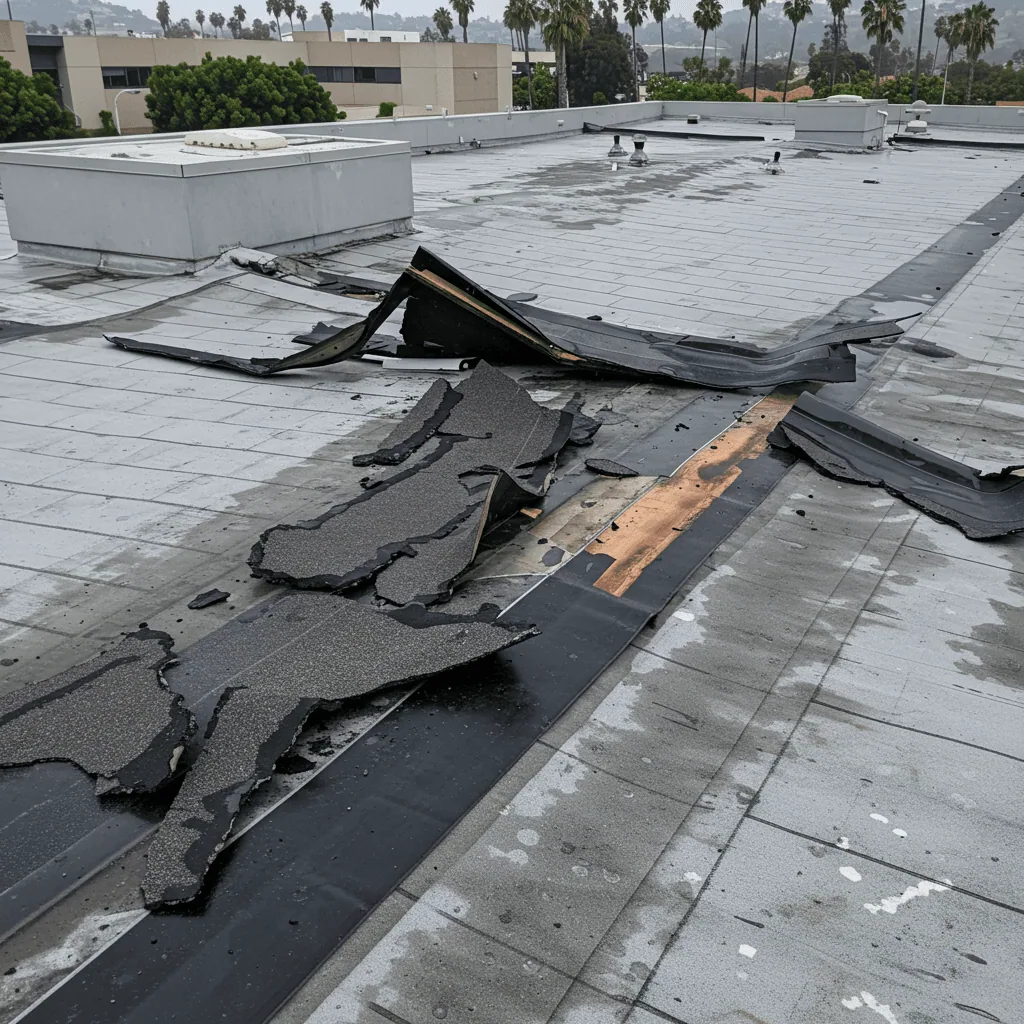
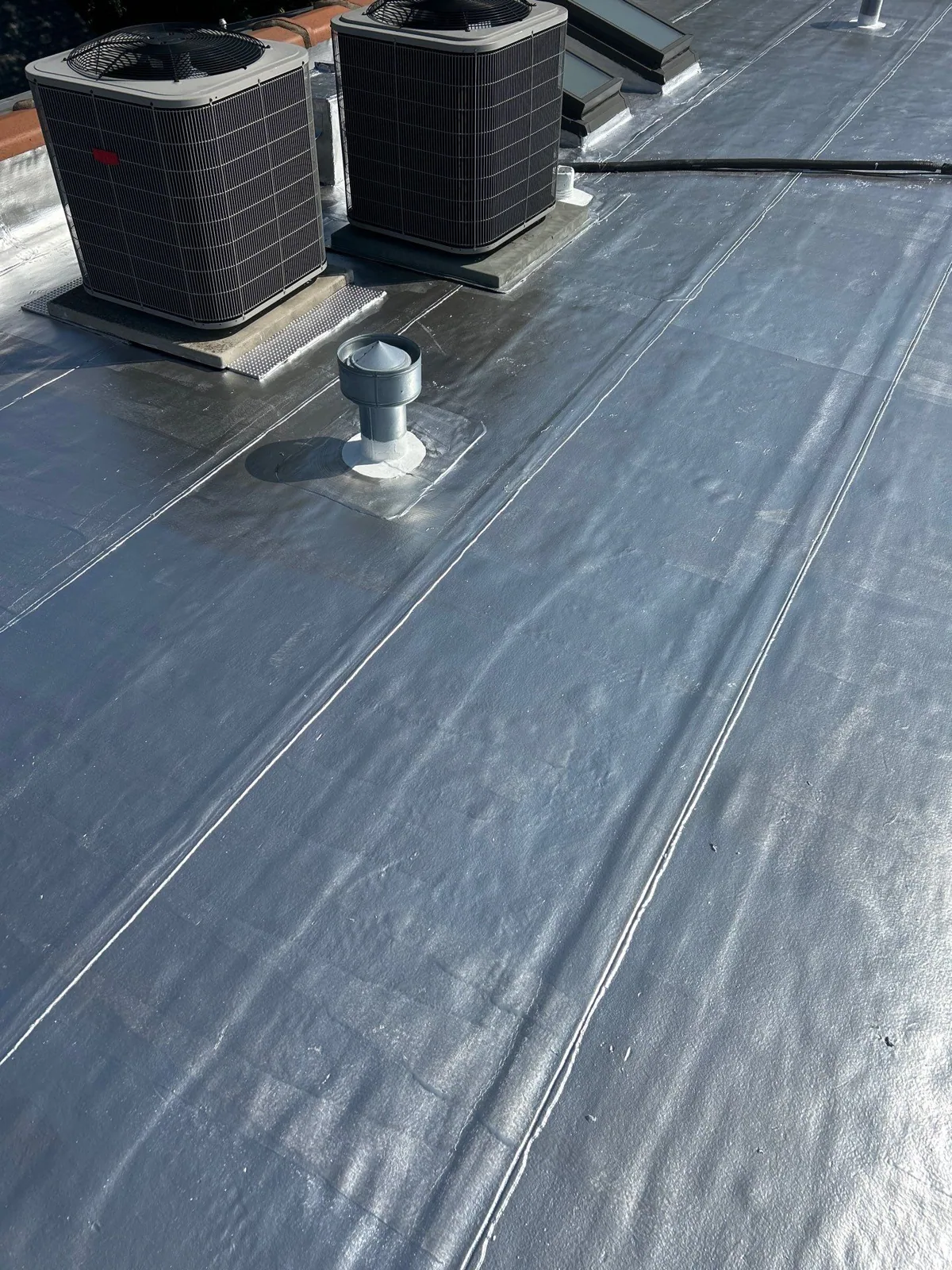
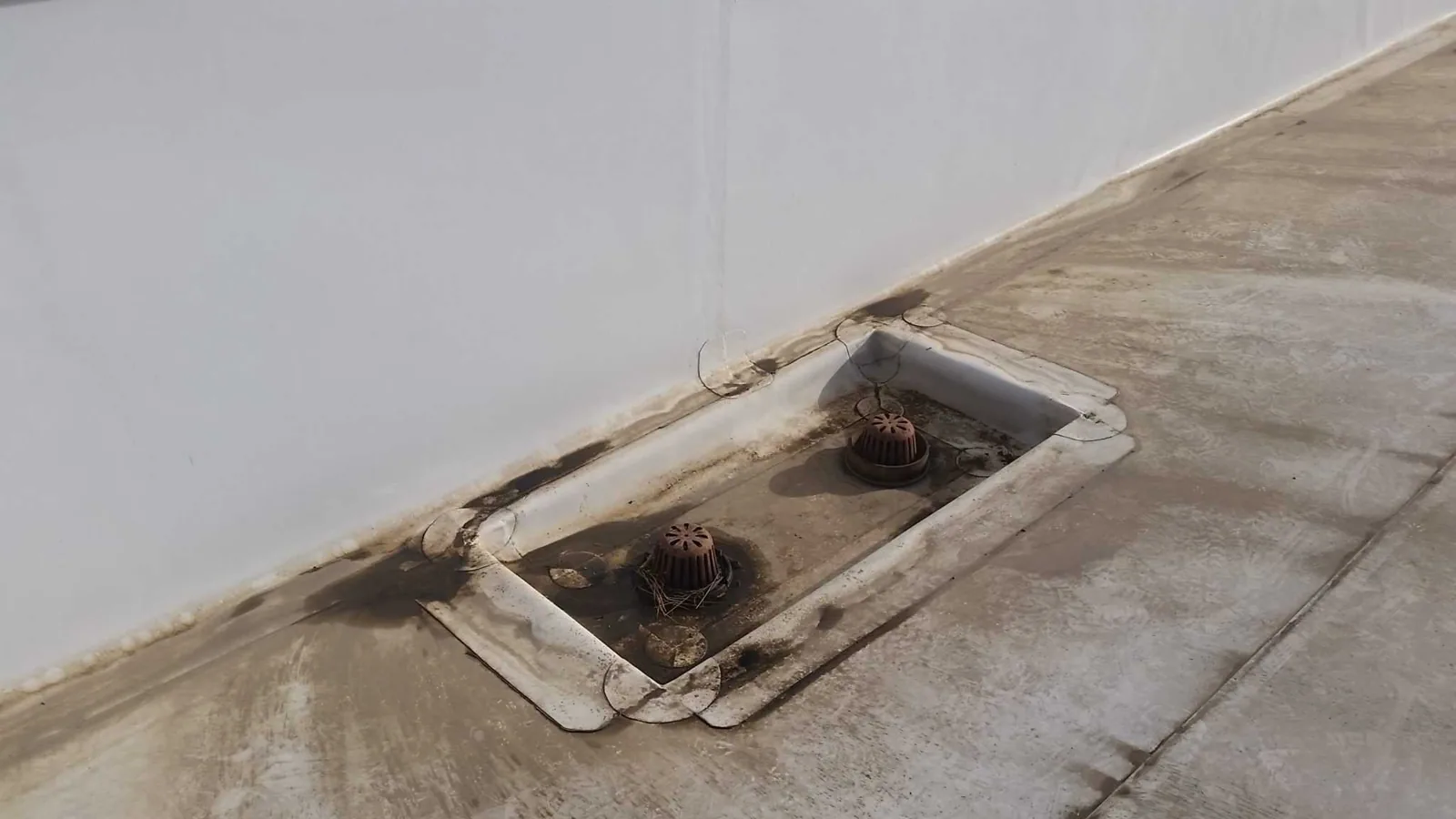
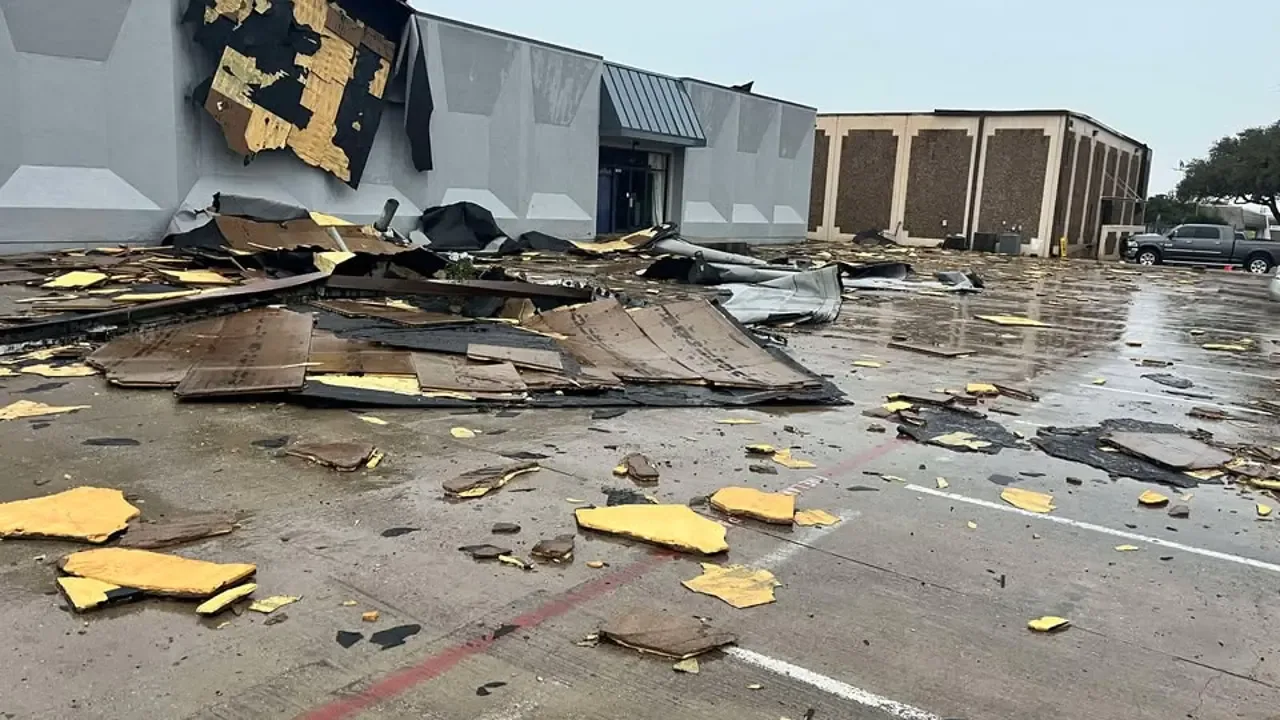
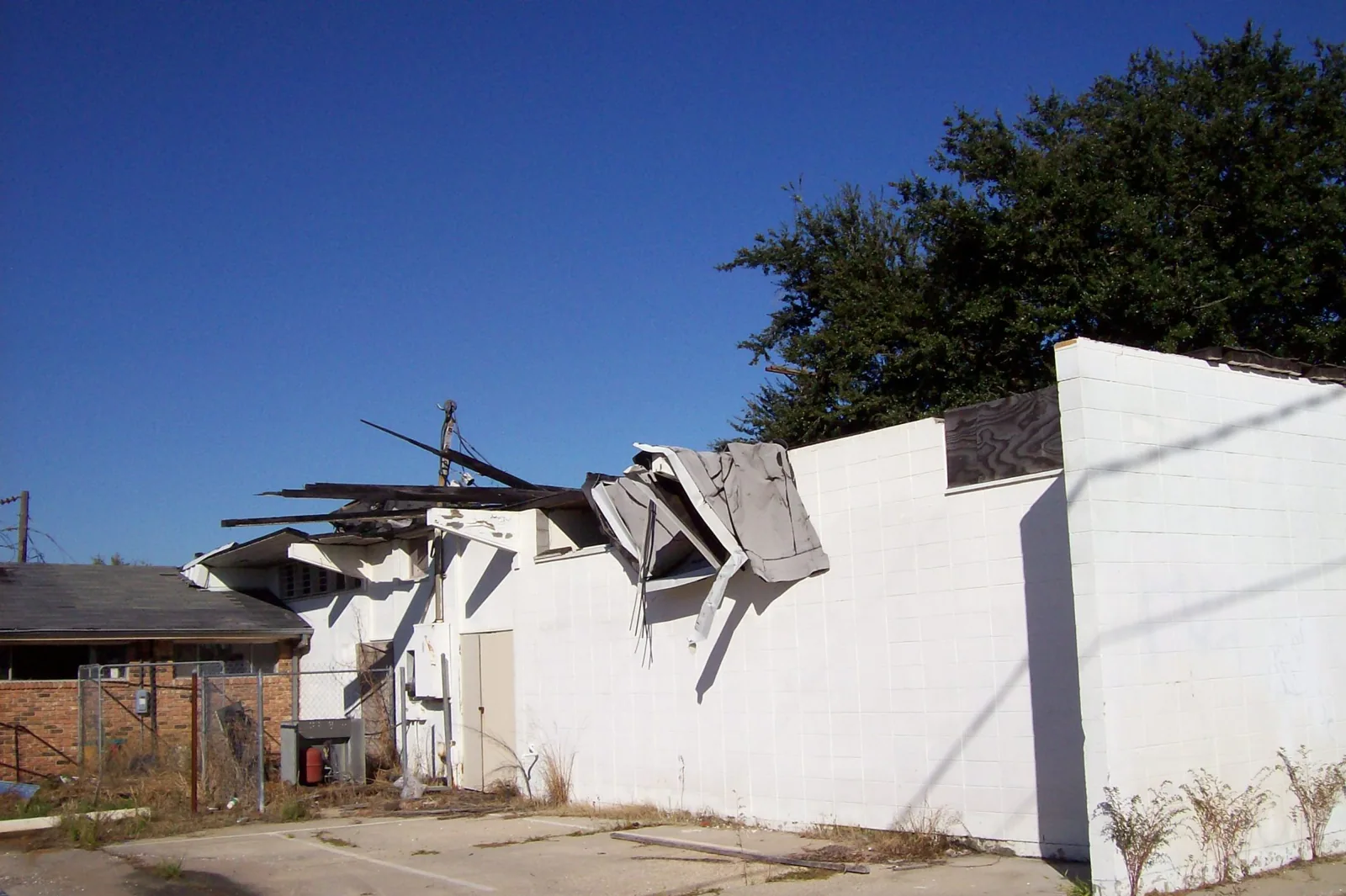
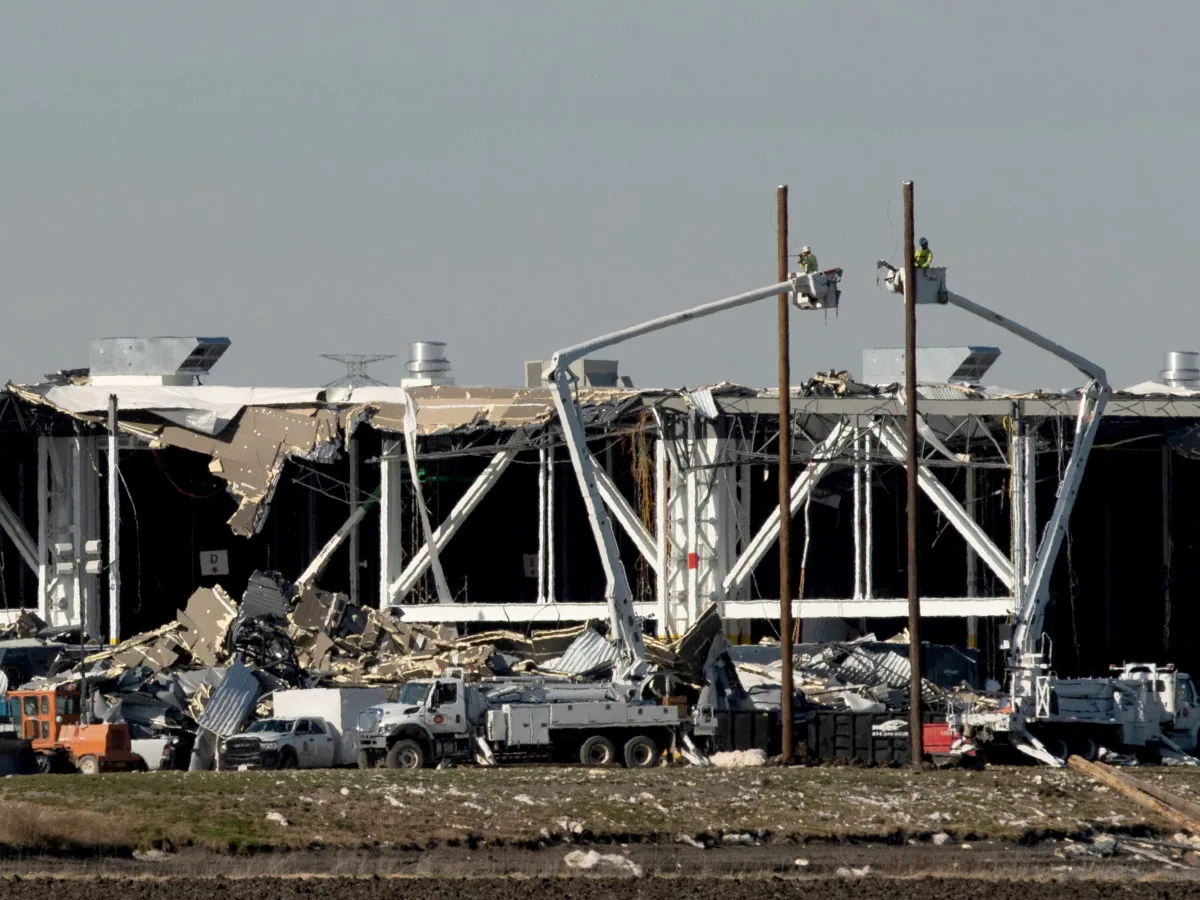
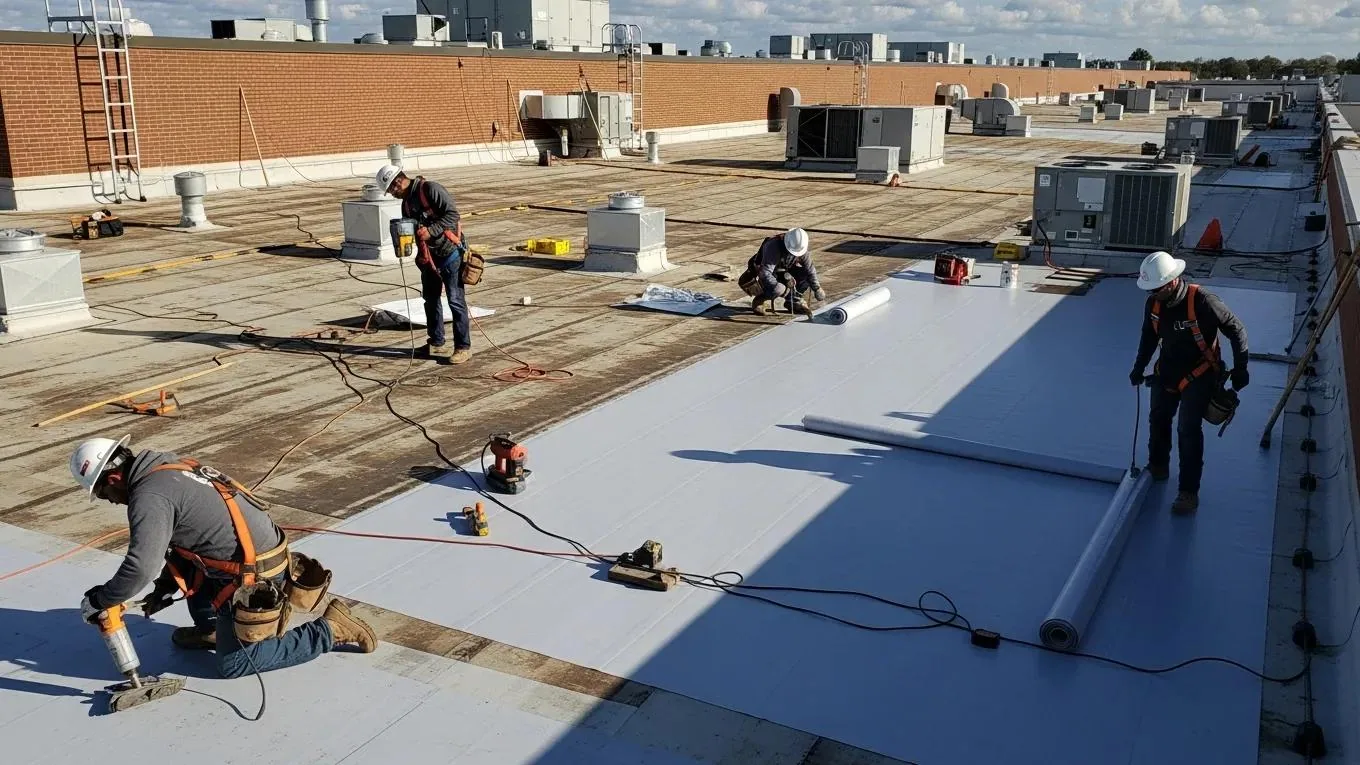
A damage report is the start of a roof investigation. We document the property, reported event or symptom, accessible roof zones, and condition observed at inspection. Missouri City faces heat, heavy rain, hail, wind, tornado, and tropical-cyclone exposure across the Houston region. After a reported storm, the inspection records visible roof conditions, photos, measurements, material identification, and the repair boundary for the property. The field record does: photos, measurements, material identification, access limits, and a repair boundary.
Wind damage and tornado-related roof repair start with edge metal, fasteners, flashings, penetrations, and membrane attachment. Hail inspection checks surface impact, splits, and vulnerable details. Tropical-storm damage requires the same property-specific evidence. We record the roof zone and distinguish observed damage from wear that predates the event.
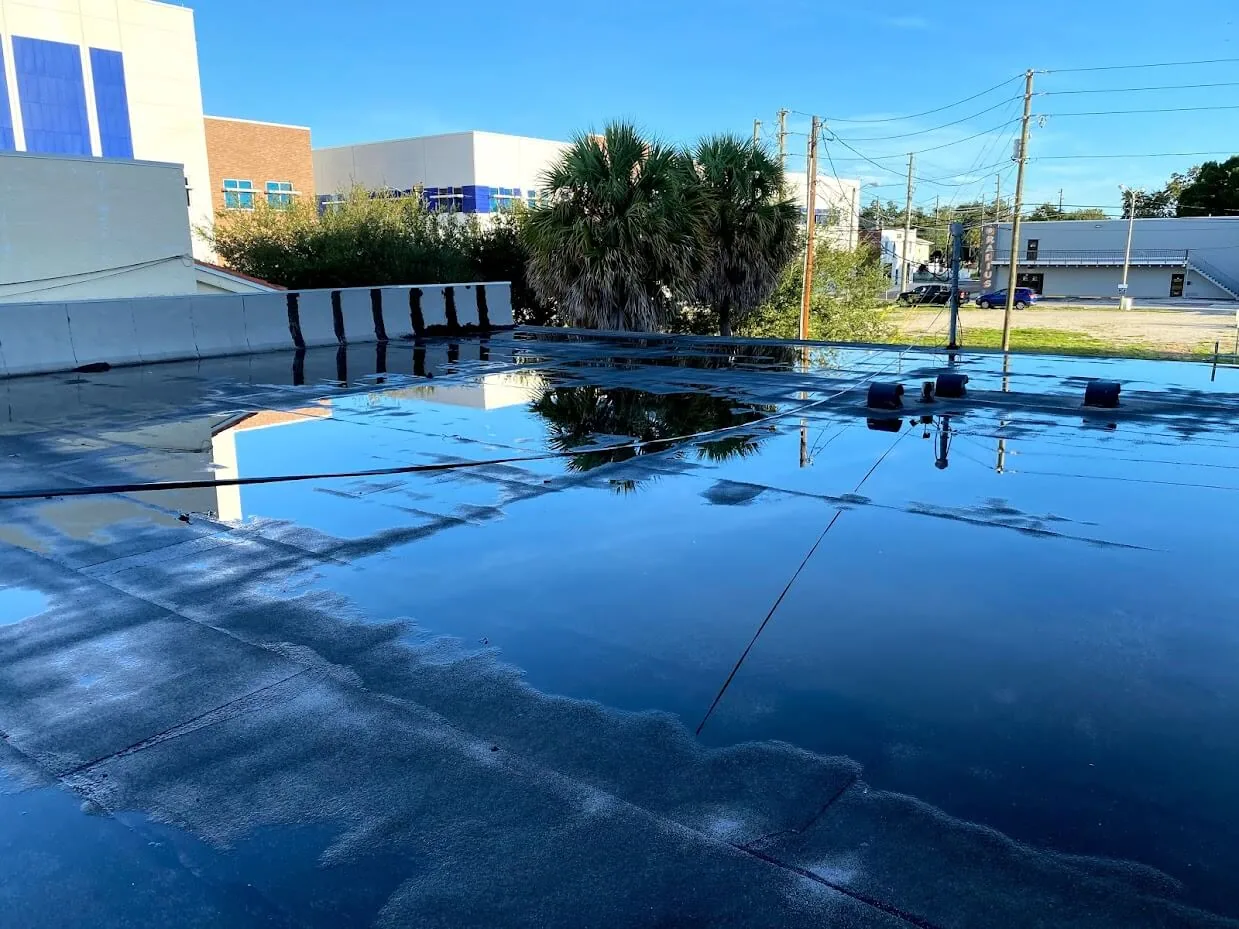
Ponding water, seam failure, and flashing failure need different repair boundaries. We follow the report to drains, curbs, laps, wall transitions, and edge conditions. A ceiling stain alone does not show where water entered. A controlled test opening may be recommended when concealed insulation changes the quantity, with owner approval before the assembly is disturbed.
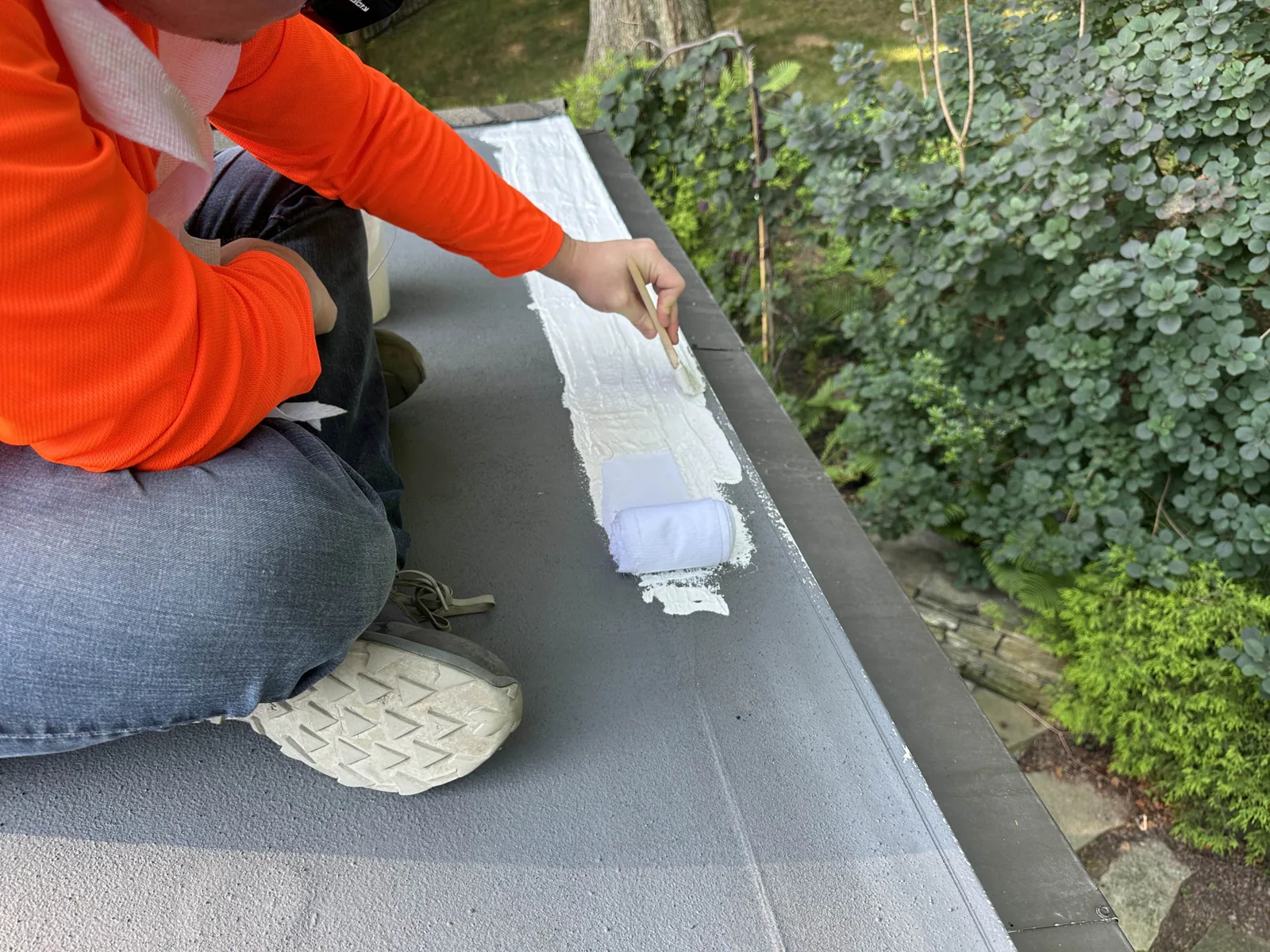
Membrane puncture repair and heat and UV repair begin with material identification and surrounding surface condition. A localized patch needs compatible substrate and preparation. Broader deterioration may require a recover or replacement comparison. Missouri City’s hot summer conditions and substantial rainfall make drainage and end-of-shift protection part of the repair plan.
The written scope states preparation, material, dimensions, roof zone, protection below, and test method. If insurance documentation is requested, claim support can organize date-stamped observations and repair quantities. Work at Fort Bend Town Center or in the Stafford Island District still receives an individual inspection record. A nearby property or weather notice does not substitute for measurements on this roof. Timing can also depend on access, material availability, tenant protection, and a safe weather window. We identify those constraints before committing to a sequence.
No. We inspect the property and record observed conditions, photos, measurements, and access limits. The event helps frame the review, but the repair quantity comes from the roof.
We trace the reported area to nearby roof details and note what is confirmed. If moisture is concealed or access is limited, the report identifies the test or opening needed next.
It lists the affected roof zone, measured quantity, preparation, material, protection, and closeout test. Older wear or concealed conditions are separated from event-related findings when they can be distinguished.
Yes. We can provide photographs, field observations, dimensions, and proposed repair limits. The owner submits the documentation and coordinates coverage questions with the insurer.